The House You Slow Down For
Every Spokane neighborhood has one: the house with the roofline so clean it looks drawn on, every peak traced, the big tree out front wrapped trunk-to-branch, everything glowing the same warm white at exactly 4:30 when the early dark rolls in. That's not luck and it's usually not a homeowner with a staple gun. It's measured, custom-cut lighting installed by someone who does nothing else from October through January.
We connect Spokane homeowners with an insured local installer who builds that display for your home — designed around your architecture, your trees, and your taste, whether that's understated warm white on a Rockwood Tudor or full multicolor with the works on a Valley rambler. And because it's full-service, the same pro maintains it all season and takes it down when the holidays end.
What We Light on Spokane Homes
- Rooflines and eaves. The backbone of the display — C9 LED bulbs on socket wire, cut to the exact length of every run, clipped straight so lines stay crisp under wind and snow.
- Peaks, gables, and dormers. Tracing the architecture is what separates a professional look from a strand along the gutter. Steep or complex rooflines are exactly what pros are for.
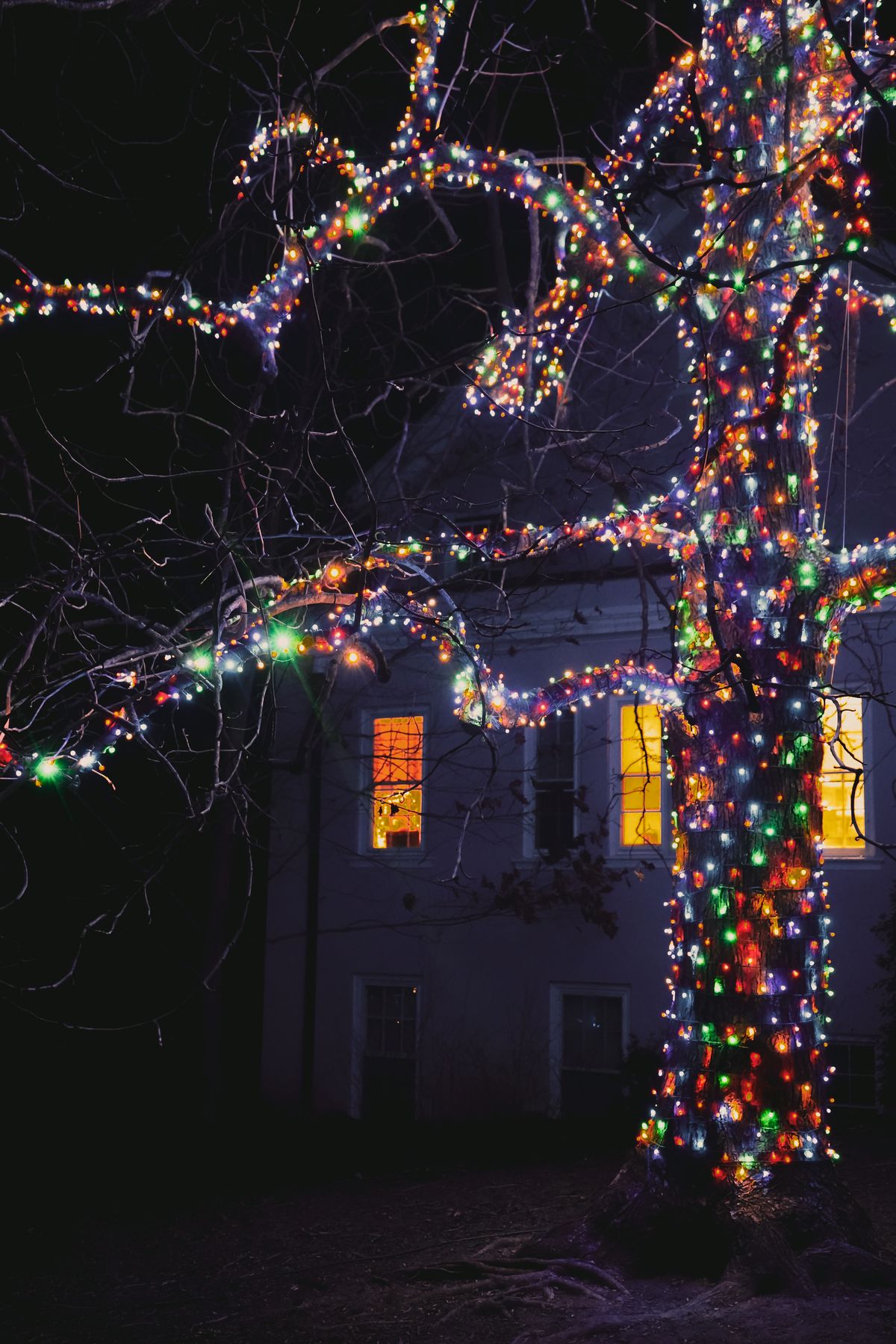
- Tree trunk and branch wrapping. Mini-light wraps on maples, oaks, and birches — the single highest-impact upgrade for homes with mature trees.
- Evergreens and shrubs. Net lighting or hand-strung minis on spruce, arborvitae, and foundation plantings.
- Garland and wreaths. Lit garland on porch rails, columns, and entryways; oversized wreaths on gables and above garages.
- Ground stake lighting. Path and driveway lines that frame the whole scene without a single cord across the lawn.
Choose a Look, Not a Box of Lights
The design conversation is short but it matters. Classic warm white reads elegant and suits Spokane's older housing stock — it's the look most South Hill and Kendall Yards homeowners ask for. Traditional multicolor C9s deliver the nostalgic glow of the displays you grew up driving past. Red-and-white candy cane patterns, cool ice-white, or two-tone gold-and-green all come from the same custom-cut system; the bulbs are the variable, not the price structure.
Because bulbs are individually socketed, patterns can change year to year without rebuying the display — a practical perk of commercial-grade product over sealed retail strands.
Built for a Spokane Winter
Whatever goes on your roof in October has to survive whatever the Inland Northwest throws at it through January: an average first snow in mid-November, December's foot-plus of accumulation, freezing rain, chinook winds, and week-long stretches below freezing. Commercial-grade LED strands are built for exactly that — heavier gauge wire, sealed sockets, bulbs that shrug off cold that turns cheap plastic brittle. Connections get weatherproofed, cords get routed and secured, and timers keep everything automatic so nobody's out at the outlet in a snowstorm.
And when winter wins a round anyway — a strand fails, a bulb goes dark, a windstorm shakes something loose — in-season maintenance is part of the deal. You call, someone comes back and fixes it.
No Staples. No Nails. No Bent Gutters.
The quiet cost of DIY lighting is what it does to the house. Staples through cord insulation, nails in fascia boards, gutter hooks bent under ice load — a few seasons of that leaves marks that outlast any display. Professional installs use removable clips matched to your specific roof edge: shingle clips, gutter clips, ridge clips for peaks. In January everything comes off clean, and your roof is exactly as the crew found it. If you have a metal roof, tile, or something unusual, say so in the quote request — there's an attachment method for nearly everything, it just needs planning.
A note on timing your install: lights can go up well before you turn them on. Plenty of Spokane homeowners have their display installed in late October — dry roof, mild weather, relaxed schedule — and simply leave it dark until the day after Thanksgiving. You get first-choice scheduling and a safer install; the neighborhood gets its glow on your schedule.
Design Details That Separate Good from Great
A few choices make an outsized difference, and they're worth thirty seconds of thought before your quote call. Bulb spacing: 12-inch spacing reads classic and generous; 15-inch stretches budget on long rooflines with a slightly airier look. Peaks versus eaves: lighting only the horizontal eave line is cheaper, but tracing the peaks is what makes a house look drawn in light — on most homes it's the single best money spent. And restraint: the most-admired displays in any neighborhood usually light two or three elements exceptionally well rather than everything at once. A roofline, one showpiece tree, and a lit entry beats a yard full of competing pieces — and costs less.
What to Expect on Install Day
The crew arrives with your display pre-cut and labeled from the measurement, so most single-family installs finish in two to five hours. Rooflines go up first, then trees and greenery, then power: cords routed along downspouts and bed edges where they disappear, timer set to your schedule, and everything tested before the truck leaves. You don't need to be home — plenty of installs happen while owners are at work, with a photo text when it's done. The only prep worth doing: unlock the gate, move vehicles off the driveway edge the ladders need, and know which exterior outlet you want to feed the display.
How a Residential Install Goes
- Quote. Send the form or call. The installer measures your roofline (satellite imagery plus a drive-by covers most homes), talks through design and colors, and quotes a firm price. See our cost guide for typical ranges.
- Install day. A crew arrives with your custom-cut lights, installs the full display, sets timers, and walks you through it. Most homes are done in a few hours; you don't need to be home.
- All season. The display runs on its timer. Anything fails, maintenance is a phone call.
- January. The crew returns for takedown and storage. Your garage stays empty and nothing gets tangled.
Residential FAQs
What does a typical home cost?
Most Spokane homes land between $500 and $1,500 full-service, depending on footage, height, and whether trees are included — the complete breakdown is on our pricing page. Quotes are free and firm.
Can you match what my neighbor has?
Almost certainly — most premium displays around Spokane are built from the same commercial C9 LED system, so "warm white roofline like the house on the corner" is an easy design brief. Bring a photo of any display you love and the installer can price the same look for your architecture.
Do you hang lights I already own?
Some installers will, at labor-only rates (roughly $2–$5 per foot), but most can't warranty or maintain retail-grade strands — if your lights fail in December, the return trip isn't free. It's worth pricing full-service before deciding; the gap is often smaller than expected.
What about two-story homes and steep roofs?
That's the core of the business. Crews carry the ladders, standoffs, and fall protection that two-story and steep-pitch work requires — the exact jobs where DIY gets dangerous, especially after Spokane's first freeze. Height affects price, not feasibility.
When should I book?
For the 2026 season: now through early October for the best selection. Install calendars around Spokane genuinely fill by late October — the installers aren't inventing urgency, they just have about six workable weeks and one crew per truck.
Will you light just my trees, or just one peak?
Partial displays are common — a single front gable, one showpiece tree, garland and a wreath at the entry. Note that many installers have a seasonal minimum job size, so very small projects may be priced at that floor.
Make Yours the House Worth Slowing Down For
Free quote, firm price, and first choice of install dates if you book before the fall rush.